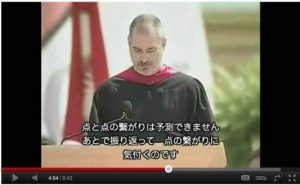
Stay Hungry!” Now, Just as Steve Jobs Said, All the Dots in My Life Have Connected to Form a Complete Picture. [My History No. 10]

I now possess all the skills necessary to sell art online and to conceive of and implement new forms of art business.
The fact that I was more or less forced to learn programming during my university years eventually led me to make programming education my profession.
Furthermore, I am now a professional web director and web designer, and I am highly proficient in creating artwork using graphics software such as Adobe applications and Painter.
For many years, I have attracted students to the programming school I run solely through web marketing using my own website.
The English skills I was constantly required to develop during my university years have also enabled me to create an English-language version of my website without difficulty.
I was unable to fulfill my dream of becoming a surgeon. However, at the commercial university I entered—and wanted to escape from almost from the very first day—I studied programming, accounting and bookkeeping, English, law, business administration, economics, commerce, and other subjects.
After graduating, I continued to develop my knowledge and skills, building upon the foundations I had learned at university. Today, I put all of them to full use in my daily work.
Combined with the knowledge, theories, and cultural education in the humanities—including art and aesthetics, which I studied independently—all the dots represented by the knowledge and experience I have accumulated throughout my life have now connected organically to form a complete picture, just as Steve Jobs described.
A fortune-teller named Seiho Saito (斎藤聖峰) once predicted that I was destined for “the fortune of two households and two professions” (二家二業の運).
Although I did not end up having two families, I did become an independent entrepreneur in middle age, taking on two distinct professions: running a business and working as a contemporary artist.
His prediction has now become a reality.
I cannot help feeling that this, too, must be destiny.
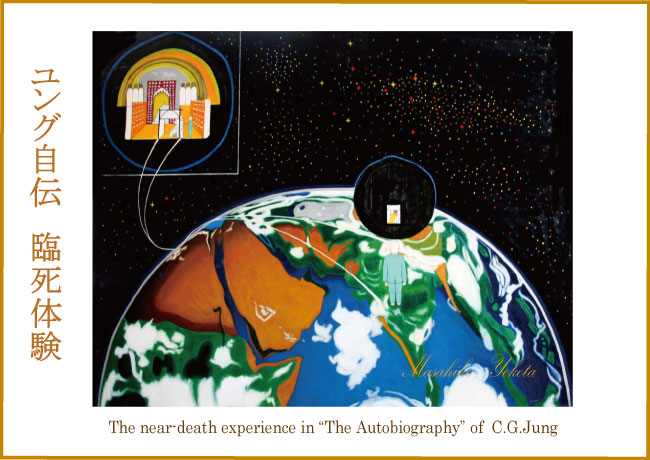
Carl Jung (カール・ユング) once said, “Destiny will not permit human intervention.”
The person Jung described as “the archetype of the wise old man who attained the highest level of insight in human history” was Laozi (老子).
Laozi once said:
“Ordinary people are radiant and bright; I alone seem dim and obscure.” (俗人昭々、我独り黄昏のごとし; see Chapter 20 on the linked page.)
In his later years, Jung remarked that he felt an increasingly profound affinity with these words as he grew older.
Now, I, too, feel a deep resonance with them.