★★★【What Is Japanese Culture? No1】・・・Discover the Characteristics of Japanese Art and Fine Art Through the Research of Earlier Scholars!

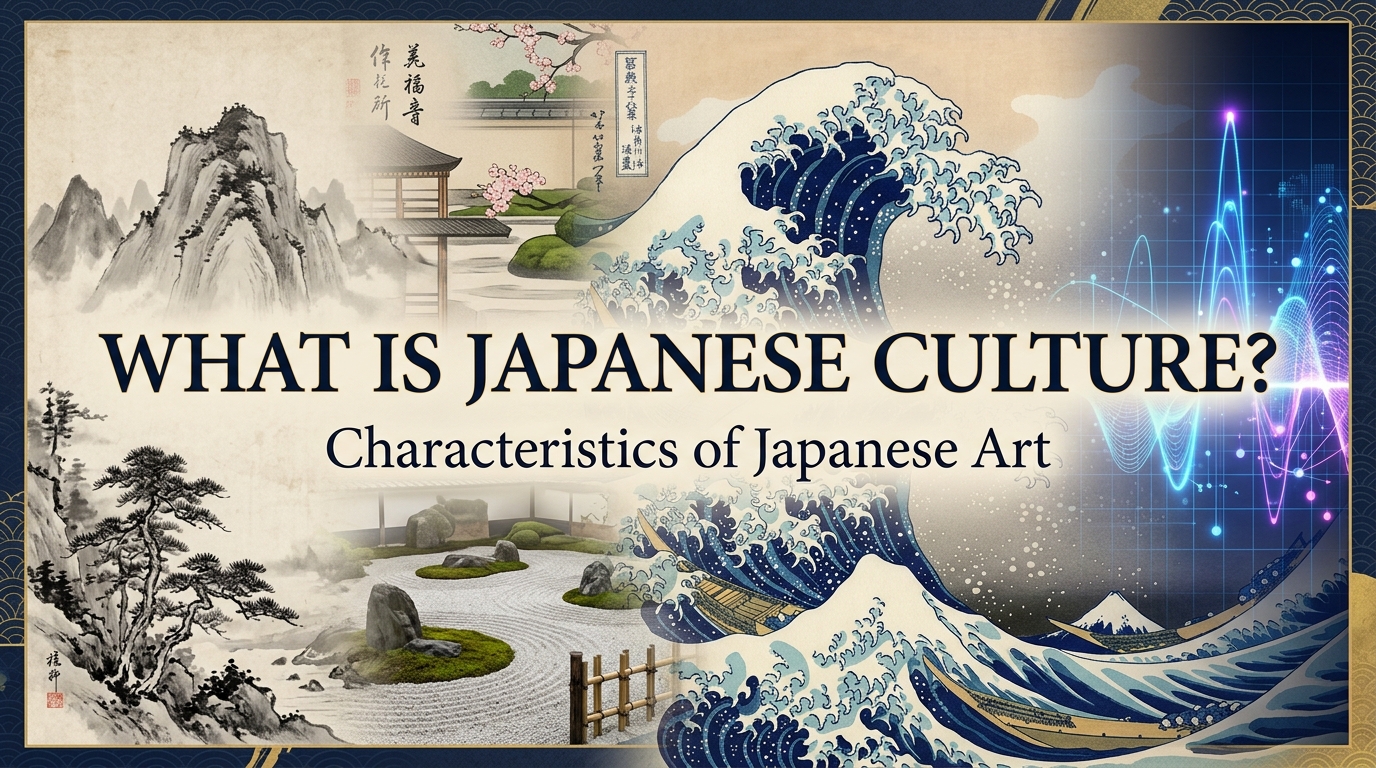
西田直二郎 (Nishida Naojiro), 西田幾多郎 (Nishida Kitaro), 安田章生 (Yasuda Akio), and the Yokota Theory
What I was taught by a professor in the correspondence course “日本文化史 (Nihon Bunka-shi / History of Japanese Culture)” at 佛教大学 (Bukkyo University) was the following idea:
“To understand Japanese culture, first learn from 西田直二郎 (Nishida Naojiro). Next, study 西田幾多郎 (Nishida Kitaro), and using that as your foundation, develop your own ideas and theories.”
So today, I would like to begin from this point and clarify what Japanese culture is and what characterizes Japanese art and fine art.
① 西田直二郎 (Nishida Naojiro) — First, Understand Japanese Culture as a Whole
Career and Profile
Born: December 23, 1886 (Meiji 19) – Died: December 26, 1964 (Showa 39)
Birthplace: Osaka Prefecture (according to documents concerning his birthplace or upbringing)
Education: Graduated from the Department of History, Faculty of Letters, Kyoto Imperial University (1910, graduating first in his class and belonging to the first graduating class of the Department of History)
Career: Lecturer, associate professor, and professor at Kyoto Imperial University; later Professor Emeritus of Kyoto University
He was a historian who gave the first lectures in Japan on “日本文化史 (Nihon Bunka-shi / History of Japanese Culture)” and laid the foundations for modern academic research into Japanese cultural history.
Through such works as his representative book 『日本文化史序説』 (Nihon Bunka-shi Josetsu / An Introduction to the History of Japanese Culture), published in 1932, he developed a theory of cultural history influenced by thinkers such as Wilhelm Dilthey and Jacob Burckhardt, attempting to understand the historical development of Japanese culture in a comprehensive and systematic manner.
The Innovation and Content of 『日本文化史序説』 (Nihon Bunka-shi Josetsu)
Published in 1932 (Showa 7), this book dramatically changed the framework of the existing “history of politics” and “history of events,” and became a landmark work that was the first in Japan to systematize a comprehensive history from the perspective of “culture.”
Establishing “日本文化史 (Nihon Bunka-shi)” as an Academic Field
It was 西田 (Nishida) who opened Japan’s first university lectures on “日本文化史 (Nihon Bunka-shi)” at Kyoto Imperial University. Until then, Japanese historical studies—the so-called academic study of national history—had been centered mainly on philology or political events. Nishida’s achievement in establishing “cultural history” as an independent and cutting-edge field of study in Japan was extremely significant.
Nishida argued that a characteristic of Japanese culture is that it has always been influenced by foreign cultures, has not rejected those influences, but instead absorbed them completely and transformed them into something original.
Doesn't this still apply remarkably well today?
Especially after World War II, the influx and absorption of American and European culture into Japan was enormous, wasn't it?
And today's Japanese language, with its mixture of English words, can only make us smile wryly! Japanese people have absolutely none of the kind of allergy to English that is sometimes seen among Chinese people! LOL.
② Japanese People Dislike Abstract Reasoning and Logic, and Seek to Express Emotion and Sensibility — As Simply, Plainly, and Concisely as Possible
恵谷隆戒 (Eya Ryukai), a professor at 佛教大学 (Bukkyo University), states the following on page 143 of his book 『東洋文化史概説』 (Toyo Bunka-shi Gaisetsu / An Outline of the History of Oriental Culture):
“In Japan, formal logic such as the Indian theory of logic (因明, Inmyo) was accepted, but it did not develop. ... This was probably because of the Japanese tendency to dislike arguing through logic and to dislike quibbling over matters. It can be considered that the Japanese possess an inherent traditional spirit that favors simplicity and conciseness to the utmost, as well as purity and integrity.”
He goes on to say that a characteristic of Japanese culture is a preference for expressing emotions and sensibilities through simplicity, plainness, and conciseness rather than through elaborate reasoning.
This seems to have been a common understanding of Japanese culture at 佛教大学 (Bukkyo University), as the same idea is also written in the textbook 『東洋文化史』 (Toyo Bunka-shi / History of Oriental Culture).
But wouldn't this be difficult to grasp for modern Japanese people, who before and after the war were the only people of the so-called “yellow race” to rapidly develop science and technology, recklessly challenge the United States, and then achieve rapid postwar economic growth, eventually becoming the world's second-largest economy in terms of GDP?
Yet Japanese has expressions such as “おまえは理屈っぽいんだって。嫌われるぞ!” (“You're too argumentative. People will dislike you!”), “屁理屈言うな!” (“Don't make ridiculous arguments!”), and “理屈はどうであれ…” (“Regardless of the logic…”). People of the Showa single-digit generation, such as my parents, often said things like these.
Looking back, Japanese cultural forms such as waka poetry, haikai, the tea ceremony, gardens such as stone gardens, and karesansui dry landscape gardens are indeed simple, plain, and concise.
Even when comparing castles, unlike the Louvre, which is richly decorated with gold patterns, Japanese interiors placed paintings such as hawks by the 狩野派 (Kano School) on fusuma sliding doors, while leaving the rest to wooden pillars and beams and walls. Isn't this the ultimate in simplicity?
④ 西田幾多郎 (Nishida Kitaro) — Next, Consider “Human Beings and the World”
Career and Profile
Born: May 19, 1870 (Meiji 3) – Died: June 7, 1945 (Showa 20)
Birthplace: U-no-ke Village, Kahoku District, Ishikawa Prefecture (present-day Kahoku City)
Education: Completed the special philosophy program at the Department of Philosophy, Faculty of Letters, Tokyo Imperial University (1894)
Career: After serving as a professor at Fourth Higher School and elsewhere, he became associate professor and professor at Kyoto Imperial University.
Later Professor Emeritus of Kyoto Imperial University
西田幾多郎 (Nishida Kitaro, 1870–1945) was one of Japan's leading philosophers.
After developing ideas such as “純粋経験 (Junsui Keiken / Pure Experience)” and “場所 (Basho / Place),” he developed the concept of **“行為的直観 (Koi-teki Chokkan / Acting Intuition)”** in his later period.
Here, seeing and acting, knowing and creating, are not separated.
At the same time that the self acts upon the world, the world also shapes the self.
In artistic creation as well, this “unity of action and intuition” becomes important.
In other words, we do not merely look at the world; through our relationship with the world, we ourselves are also created. This is the philosophy that should be studied next.
The achievement of the philosopher 西田幾多郎 (Nishida Kitaro), the founder of the Kyoto School, in his research on Japanese culture and his advancement of that research lies in the fact that he “used Western logic (philosophy) to translate and systematize the spirit of the East and Japan into language that could be understood throughout the world.”
Whereas the historian 西田直二郎 (Nishida Naojiro) approached Japanese culture through the historical process—the facts—the philosopher 西田幾多郎 (Nishida Kitaro) presented the underlying “way of seeing and logic” itself to the world as philosophy.
Based primarily on his major work 『日本文化の問題』 (Nihon Bunka no Mondai / The Problem of Japanese Culture), published in 1940, I will organize his achievements into three points.
1. He Explained Japanese Culture Through “the Logic of the World” (Philosophization of Eastern Thought)
Until then, discussions of Japanese culture tended to become emotional and intuitive subjective arguments such as “Japan is wonderful” or “wabi-sabi is profound.”
After completely absorbing the sophisticated logical systems of Western philosophy, including Kant and Hegel, 西田幾多郎 (Nishida Kitaro) attempted to logically demonstrate that “the Japanese and Eastern sense of beauty and Zen thought possess universal truths that transcend Western philosophy.” Through this, the study of Japanese culture evolved from “an explanation of a local hobby and tradition” into an academic discipline—philosophy—that could engage in discussion on equal terms with thinkers throughout the world.
2. Presenting the “Place of Nothingness (an Empty Center)” at the Root of Culture
西田幾多郎 (Nishida Kitaro) explained why Japanese culture is able to “absorb foreign influences and make them completely its own” through the philosophical concept that became his hallmark: “無の場所 (Mu no Basho / Place of Nothingness).”
The nature of Japanese (Eastern) culture: a culture of “無(絶対無)(Mu / Absolute Nothingness).”
Its center is kept “empty (nothingness).”
This is similar to what 河合隼雄 (Kawai Hayao), a Jungian psychologist, said: “Buddhism has neither a scripture like the Bible nor a definitive doctrine. Its center is empty, like a typhoon.
Because it has no center, it accepts any opinion by saying, ‘That may also be true; we cannot know,’ and therefore it does not lead to the fierce disputes and wars seen in Christianity or Judaism.”
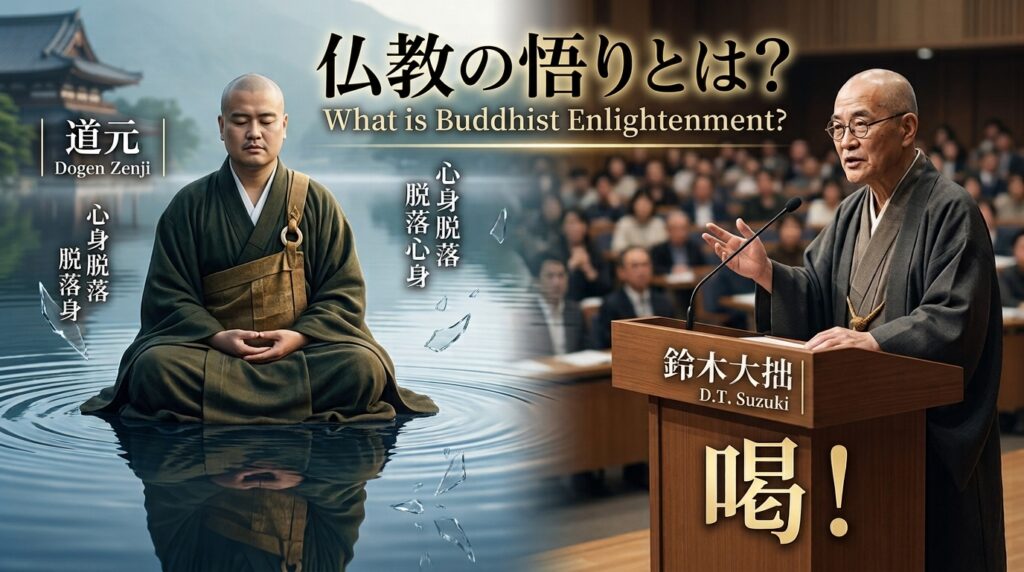
西田 (Nishida) was a close friend of the Buddhist scholar 鈴木大拙 (Suzuki Daisetsu), and both of them practiced zazen meditation enthusiastically.
The theories and words of 西田幾多郎 (Nishida Kitaro) and 鈴木大拙 (Suzuki Daisetsu) also became a stimulus for the discovery of the meson theory by 湯川秀樹 (Yukawa Hideki), who was at the same Kyoto University.
Precisely because the center is empty, Buddhism, Chinese thought, Western science, and anything else can be accepted and allowed to move freely within it.
Nishida argued that this characteristic—“because it has no fixed form, it can accept every form and, through doing so, determine itself (絶対矛盾的自己同一 / Absolute Contradictory Self-Identity)”—is the essence of the Japanese spirit.
This is a philosophical clarification of the mechanism behind the “power to transform things into something original” that 西田直二郎 (Nishida Naojiro) advocated.
3. “Worldism (Global Perspective)” That Rejected Ultra-Nationalism
From the early Showa period through the wartime years, when 西田 (Nishida) was actively disseminating his ideas on Japanese culture, Japan was swept by a narrow nationalism—an ultra-nationalism proclaiming “Long Live Japan!”
In this environment, Nishida criticized the military authorities and the right wing, saying:
“Respecting only what is uniquely Japanese is not enough. There is no true culture in that.
It cannot be a culture merely for domestic use. We must create a culture that is truly global.”
Rather than boasting about the superiority of Japanese culture and shutting itself away, he argued that Japan's responsibility was to use the characteristic of Japanese culture—its “logic of nothingness that embraces everything”—to construct “a new world order in which different cultures throughout the world can coexist while maintaining their individual identities.”
⑤ 安田章生 (Yasuda Akio) — “幽玄 (Yugen)” and “余情 (Yojō)”
I learned about 安田章生 (Yasuda Akio)'s book 『日本の芸術論』 (Nihon no Geijutsuron / Japanese Theories of Art), published by 東京創元社 (Tokyo Sogensha), through the book of 千住博 (Senju Hiroshi).
The first edition was published by 東京創元社 (Tokyo Sogensha) in 1957. A new edition was published in 1972.
千住博 (Senju Hiroshi) says, “Much of my view of art owes a great deal to this book.”
So I read it, and I found it to be an extremely profound and worthwhile book.
Its scope extends beyond fine art to calligraphy, flower arrangement, music, novels, and various other artistic fields.
However, the central concepts in every field are “幽玄 (Yugen)” and “余情 (Yojō).”
“余情 (Yojō)” means not only what is directly expressed in a work, but also the emotions, imagination, and meanings that remain in the viewer's mind after seeing the work and continue to expand from there.
This means that by creating works that are “simple, plain, and concise,” as described earlier, and valuing empty space, the artist can actually generate new emotions and poetic feeling within the viewer precisely by not depicting everything.
This reminds me of the works of the Mono-ha artist 李禹煥 (Lee Ufan).
李禹煥 (Lee Ufan) wrote the book 『余白の芸術』 (Yohaku no Geijutsu / The Art of Empty Space), and one of his series is titled 『関係項』 (Relatum).
李 (Lee) is Korean, but he presumably studied this Japanese minimalism as a matter of course, and seems to possess a sensibility that seeks to reduce expression to the minimum—for example, by placing as few objects as possible in a room.
So, what is 幽玄 (Yugen)? One might imagine the solemn, static world of a Noh stage, but that is not exactly what it means.
Just as the character 美 (bi / beauty) is said to have originated from the image of a large, plump, healthy, glossy, delicious-looking sheep, 幽玄 (Yugen) also refers to beauty.
However, rather than delicate and subtle beauty, it has a strong connotation of a healthy beauty arising from abundance, fullness, and sensual richness.
In this book, various people use the word in different ways, saying things such as “Above all, you must value 幽玄 (Yugen),” so it is difficult to identify one definitive, fixed meaning.
However, when we think about it carefully, it leads to the meaning described above.
“Simple” Does Not Mean Poor or Weak Expression — It Is an Aesthetic in Which Empty Space Speaks!
Japanese “simplicity” does not merely mean having nothing. It means removing what is unnecessary and leaving the essence behind.
Then, the parts that are not expressed are entrusted to the viewer.
As a result, the following flow emerges:
“simplicity → omission → empty space → imagination → 余情 (Yojō)”
One of the important modern figures who clearly discussed this “beauty of simplicity” was 柳宗悦 (Yanagi Soetsu).
Yanagi argued in 『工藝の道』 (Kogei no Michi / The Way of Craft) that “in craftsmanship, simplicity is a major element of beauty,”
and believed that profound beauty can arise from simplicity.
Therefore, the characteristic of Japanese beauty expressed as “simplicity and conciseness” appears to be an idea that has been discussed not only by Yanagi but also by 西田直二郎 (Nishida Naojiro) and many other thinkers.
An Integrated “Definition of Japanese Art”
Considering the theories discussed above,
“Japanese art is an art that creates 余情 (Yojō) and 幽玄 (Yugen) through symbolism, omission, empty space, and simplicity, thereby bringing a second world into being within the heart of the viewer.
A work of art is an expression of the cultural spirit and a device for generating dialogue—a ‘place’ in which the artist, viewer, and world interact with one another.”
This is how it can be defined.
This also completely corresponds to Yokota's definition:
“Art is expression, and a device that generates dialogue.”
I myself am now deeply motivated to create small works using expressions that are narrowed down as much as possible—“simple, plain, and concise”—while allowing diverse forms of 余情 (Yojō), poetic feeling, and thought to be experienced by the viewer.
★【Appendix: Theories of Art from the Heian Period to the Edo Period!】
I have researched and summarized theories of art and fine art from the Heian period through the Edo period. Please use this as a reference.
From this point onward, I will show how the essence of Japanese art has been embodied through representative works from each period.
From this point onward, I will show how the essence of Japanese art has been embodied through representative works from each period.
平安時代 (Heian Period, 794–1185) — An Era in Which “余情 (Yojō)” and “幽玄 (Yugen)” Had Already Reached Maturity
The Heian period was the era in which the spiritual structure of Japanese art matured at an especially early stage. 余情 (Yojō) and 幽玄 (Yugen) were already being practiced at a highly sophisticated level by this time.
```
源氏物語絵巻 (Genji Monogatari Emaki / The Tale of Genji Scrolls)
- A composition with extensive empty space
- Guiding the viewer's gaze through the “吹抜屋台 (fukinuki yatai)” technique
- Suggesting emotions indirectly rather than depicting them directly
Although the expressions of the characters are depicted in detail, their psychological states are suggested not through words but through composition, color, empty space, and the flow of the viewer's gaze.
Viewers
- imagine emotions that are not depicted,
- fill in what happened before and after the scene, and
- relate it to their own experiences.
At that moment, a “second world” emerges outside the work itself. This is 余情 (Yojō).
鳥獣人物戯画 (Choju Jinbutsu Giga / Animal Caricature Scrolls)
- Symbolic expressions through the personification of animals
- Omission of lines combined with a sense of movement
- Empty space generating movement
Here, the force and rhythm of the lines are emphasized more than detailed depiction.
- Omission of lines
- Omission of backgrounds
- Use of empty space
These elements stimulate the viewer's imagination and create an “undepicted world” within the mind.
These works of the Heian period demonstrate that the concepts and practices of 余情 (Yojō) and 幽玄 (Yugen) had already reached maturity.
```
鎌倉時代 (Kamakura Period, 1185–1333) — The Sensual 幽玄 (Yugen) Seen in the Buddhist Sculptures of 快慶 (Kaikei) and 運慶 (Unkei)
```
快慶 (Kaikei) and 運慶 (Unkei)'s Buddhist Sculptures
- Flesh-like, abundant volume
- Realism filled with vitality
Here, the “sensual beauty” of 幽玄 (Yugen) appears most clearly.
- Taut muscles
- Full-bodied figures
- A vitality that seems to glow from within
Powerful vitality resides within calm facial expressions. This is the dual structure of 幽玄 (Yugen).
```
室町時代 (Muromachi Period, 1336–1573) — 余情 (Yojō) and 幽玄 (Yugen) in Ink Painting and Noh
```
雪舟 (Sesshu) — “山水長巻 (Sansui Chokan)” and “天橋立図 (Amanohashidate-zu)”
- Omission through ink painting
- Bold use of empty space
- A structure in which the viewer “completes” the landscape
In landscape painting, rather than depicting everything realistically, variations in ink density and empty space cause a landscape to emerge within the viewer's mind. This is the ultimate expression of 余情 (Yojō).
能 (Noh) — 世阿弥 (Zeami)
- Philosophization of 幽玄 (Yugen)
- Abstraction of movement
世阿弥 (Zeami) understood 幽玄 (Yugen) philosophically as “depth.”
- Slow movements
- Few words
- A quiet stage
Within these elements reside powerful spirituality and vitality. This is 幽玄 (Yugen).
```
桃山時代 (Momoyama Period, 1573–1603) — The Beauty of Mist and Flesh in 長谷川等伯 (Hasegawa Tohaku) and 狩野永徳 (Kano Eitoku)
```
長谷川等伯 (Hasegawa Tohaku) — “松林図屏風 (Shorin-zu Byobu)”
- Empty space created by mist
- Symbolization of pine trees
- Vitality concealed within stillness
Most of the picture surface is empty space in the form of “mist.” The forms of the pine trees are also depicted symbolically rather than realistically.
Viewers
- imagine the landscape within the mist,
- read meaning into the forms of the pine trees, and
- project their own emotions onto the scene.
Here, 余情 (Yojō) and 幽玄 (Yugen) are integrated.
狩野永徳 (Kano Eitoku) — “唐獅子図屏風 (Karajishi-zu Byobu)”
- Magnificent volume
- Full-bodied depiction of the physical form
The bodies of the lions are abundant, powerful, and possess an overwhelming presence. This is an example in which the “sensual beauty” of 幽玄 (Yugen) appears with exceptional force.
```
江戸時代 (Edo Period, 1603–1868) — The Development of 余情 (Yojō) and 幽玄 (Yugen) in 琳派 (Rimpa), Ukiyo-e, and 北斎 (Hokusai)
```
琳派 (Rimpa) — 宗達 (Sotatsu), 光琳 (Korin), and 抱一 (Hoitsu)
- The beauty of empty space
- Symbolization of forms
- The fusion of decorative qualities and simplicity
In Rimpa works, empty space, simple forms, and symbolic compositions are combined, expressing 余情 (Yojō) in a refined form.
浮世絵 (Ukiyo-e) — 歌麿 (Utamaro) and 写楽 (Sharaku)
- Sensual depiction of the human body
- Fullness and sensuality
Here, the “sensual beauty” of 幽玄 (Yugen) spreads into popular culture.
北斎 (Hokusai) — “富嶽三十六景 (Fugaku Sanjurokkei / Thirty-Six Views of Mount Fuji)”
- Bold compositions
- Symbolized nature
- Empty space that stimulates the viewer's imagination
北斎 (Hokusai) depicted nature not merely as landscape but as a symbol. His compositions and use of empty space create a “second world” within the viewer's mind.
Click here for other pages in this series!
★★★【What is Japanese culture?No2】・・・Japanese Art and Aesthetics Theory — 本居宣長 (Motoori Norinaga), Its Succession by 西田幾多郎 (Nishida Kitaro), and the Influence on 梅原龍三郎 (Umehara Ryuzaburo) via the 白樺派 (Shirakaba-ha)
【Go to this page!】