My Mother's Death Helped Me Establish My Own Artistic Style! Develop a Distinctive Style of Your Own. Professional Artists Need a Signature Style That Makes Their Work Instantly Recognizable. [My History No. 7]

 I came to meet Toyotsu Yamamoto (山本豊津) of Tokyo Gallery (東京画廊) once every few years. When we met for about the third time, he gave me some rather blunt advice.
“You’re getting on in years, too. It’s about time you established your own artistic style and made your debut as an artist.”
I replied, “Wasn’t Picasso (パブロ・ピカソ) known as a ‘chameleon’ because he constantly changed his painting style? Isn’t it perfectly acceptable for an artist to have more than one style of expression?”
He answered, “If that’s your attitude, then you’re simply painting whatever you like as a hobby.”
He continued:
“Stop wasting your time on meaningless things, such as trying to win art competitions. Above all, keep producing one work after another, and send me photographs of your paintings.”

In fact, artists are no different from musicians: without their own distinctive style of expression, they cannot truly be professionals.
Take guitarists, for example. A single strum of the guitar can serve as their calling card. Eric Clapton (エリック・クラプトン) has his own unmistakable sound, just as Keith Richards (キース・リチャーズ) has his. Listeners can recognize who is playing simply by hearing the music.
For that reason, I, too, began desperately searching for my own artistic style.

There was a man named Tatsuro Yamazaki (山崎達郎), who passed away in Sapporo in 2017 at the age of 96. He was widely renowned throughout Japan as a master bartender and was the owner of the famous Bar Yamazaki (バー山崎).
Mr. Yamazaki had aspired to become a painter when he was young, but because he could not make a living from his art, he became a bartender instead. Nevertheless, throughout his life, he continued to say, “I’m going to become a painter.”
Several of his regular customers reportedly told him repeatedly:
“Mr. Yamazaki, you’ll never become a professional unless you establish an artistic style of your own!”
But no matter how many times they said this, he simply brushed off their advice, saying, “That doesn’t matter to me.”
I believe this is precisely where the paths of professional and amateur artists diverge.
Mr. Yamazaki was exceptionally skilled at kirie (切り絵), the Japanese art of paper cutting. He was famous for creating paper-cut portraits of customers’ profiles right on the spot, often while meeting them for the first time.
He made one for me, too.
My Mother's Death Led Me to Establish My Own Artistic Style: A Mysterious Experience Like Ichiro's
In 2020, my mother, who had been suffering from esophageal cancer, passed away.
During the wake, an image suddenly appeared in my mind: a golden lotus flower sculpture that I had seen on the Buddhist altar at a temple.
I vividly imagined a scene in which snow was falling on that lotus flower at night.
At that very moment, I felt that I, too, should draw my subjects more three-dimensionally, as Takanobu Kobayashi (小林孝亘) does, treating them as masses—large, solid volumes—and rendering them in a sculptural manner.
This realization suddenly liberated me from the constraints of a flat, two-dimensional style of painting, such as that of Henri Matisse (アンリ・マティス), which had previously held me captive.
It was a mysterious experience strikingly similar to the story of Ichiro Suzuki (イチロー), who overcame a batting slump and established his own batting form before moving to Major League Baseball.
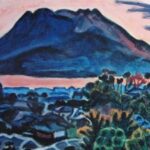
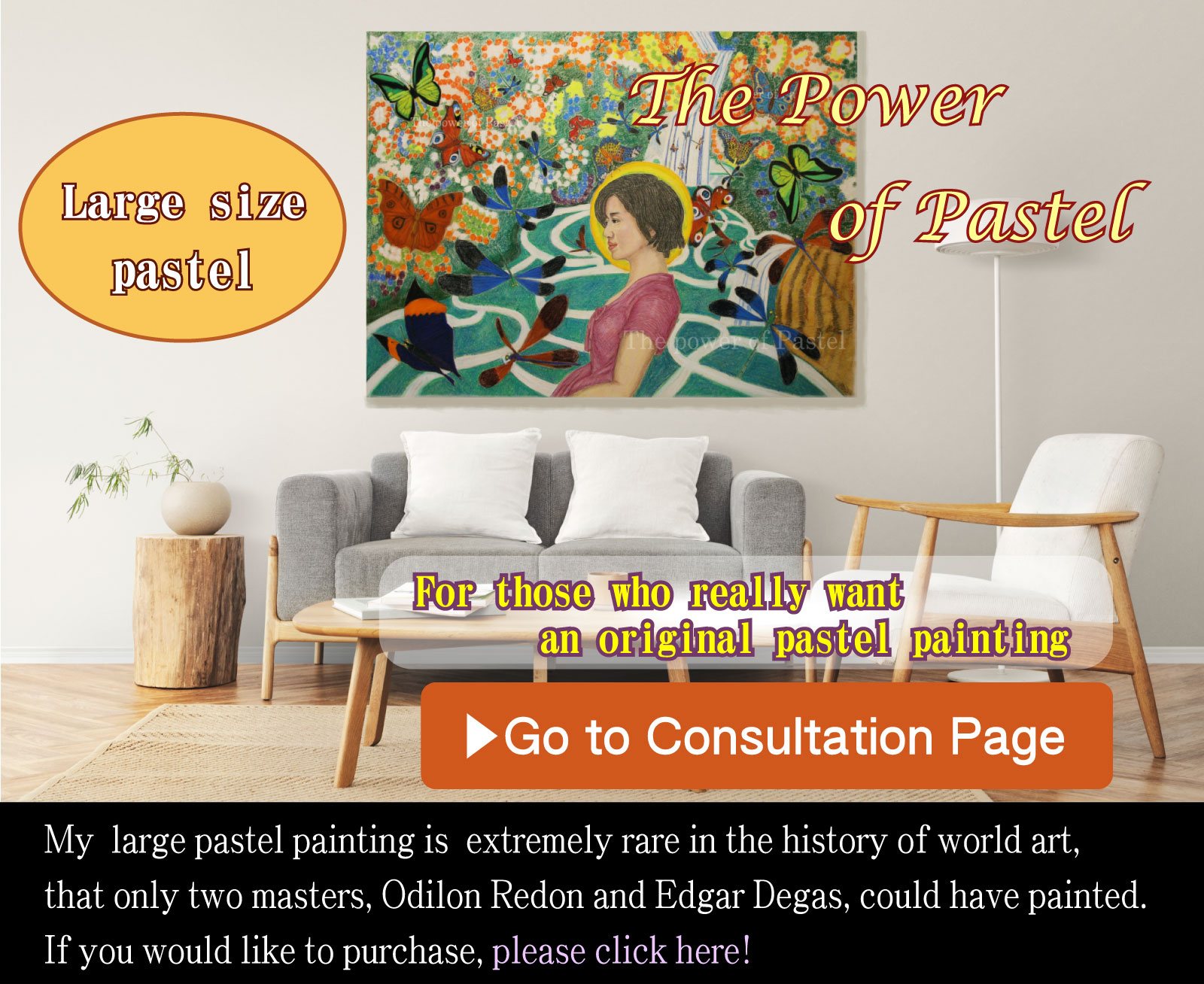
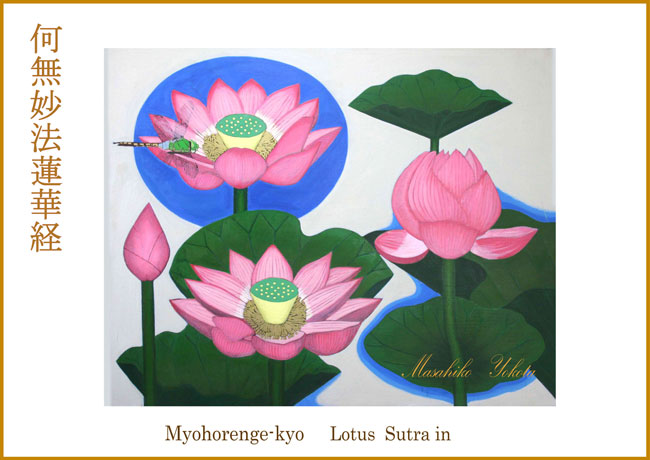
As a result, I established the artistic style seen in the photograph above on the right: a way of painting that captures objects as large, solid masses or volumes.
Furthermore, from that point onward, I began frequently dreaming almost every night that I had become Ichiro himself, producing hit after hit effortlessly on the baseball field.
At that time, just as Ichiro had reportedly become convinced after his own experience that
“I probably won’t fall into another slump again,”
I realized that I would no longer struggle to find subjects to paint.
I also realized that I could produce paintings in virtually unlimited numbers.
I came to understand that there were still countless things in the world of art that had yet to be depicted—and that there would always be an infinite number of subjects waiting to be painted.
For the first time in my life, I experienced what I can only describe as a divine revelation—an extraordinary moment of inspiration.
Until then, I had understood death intellectually, as an abstract concept, but I had not truly understood it emotionally.
I believe that confronting my mother's death opened the doors of my heart. My profound grief and gratitude were released all at once, emerging as vivid images in my mind.
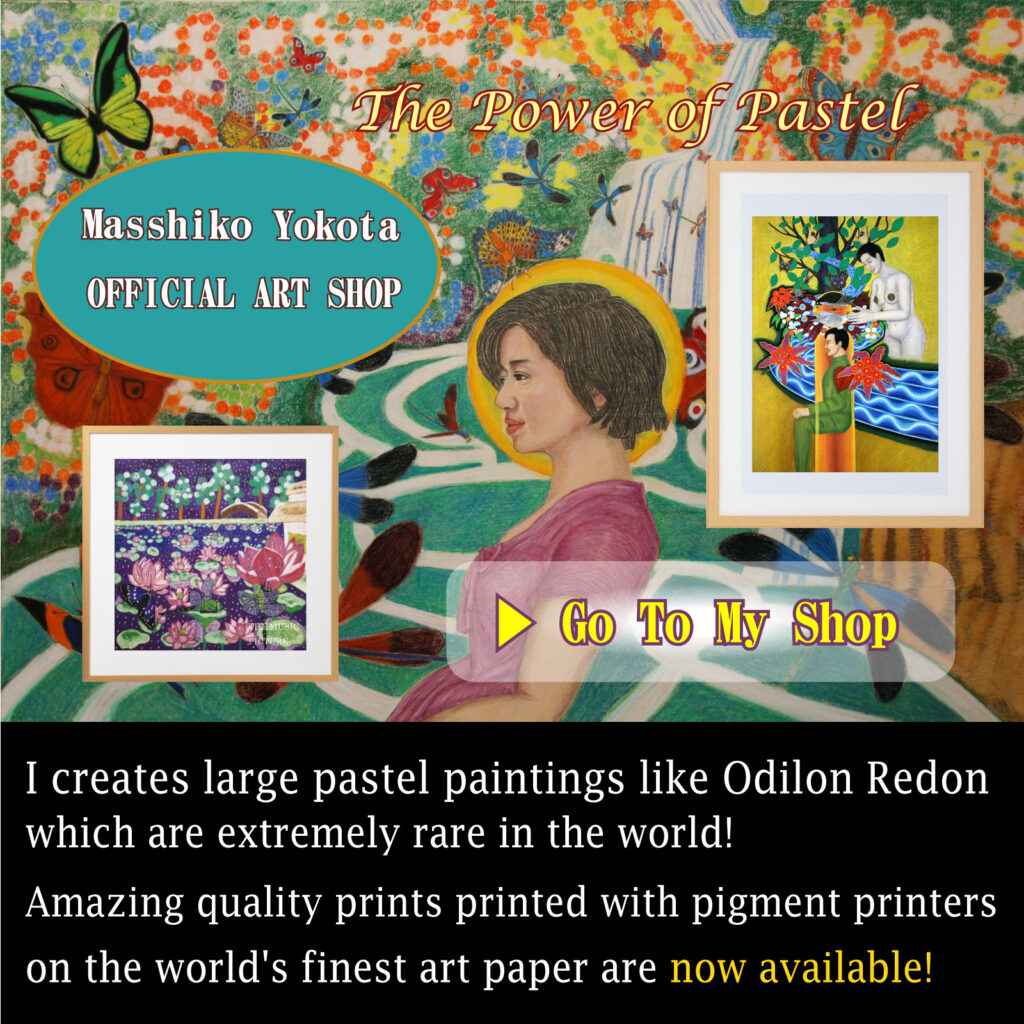
Several years later, I established my style of painting with pastels on paper.
I believe that, today, there are very few artists anywhere in the world who work seriously with pastels on paper in the tradition of Odilon Redon (オディロン・ルドン), as I do.
Why did I begin painting with pastels? Please visit this page to find out.